

Student group launches initiative to address anti-Muslim stereotypes

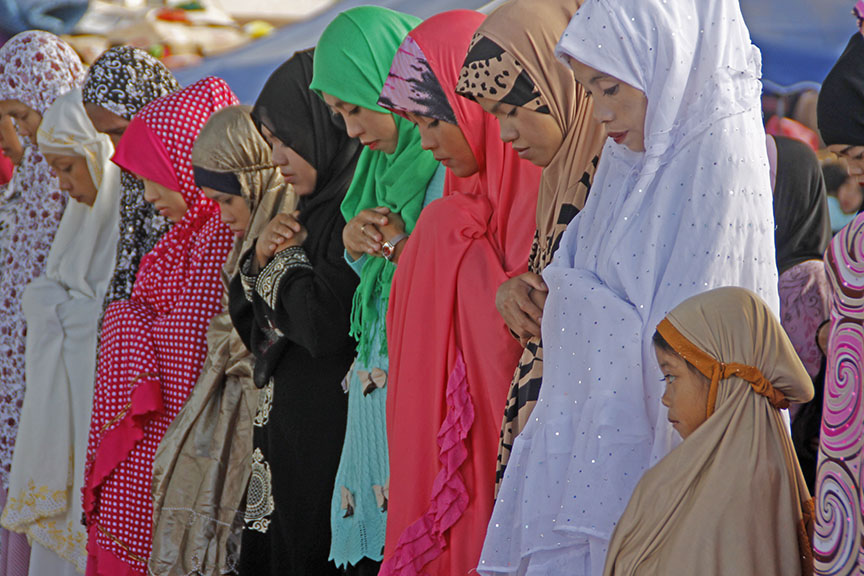
DAVAO CITY (MindaNews / 16 May 2026) — A student organization has launched a school-based initiative aimed at addressing stereotypes against Muslims.
Dubbed “Project As-Salam,” Arabic for “From Truth Comes Peace,” and led by the Muslim Students for Peace and Solidarity (MSPS), the initiative targets students as future professionals who will help shape inclusive communities.
Shezhad Ugtonan, MSPS external vice president, said the project was conceptualized “to achieve harmony through understanding in a diverse community” amid the continuing stereotyping of Muslims.
MSPS president Shahir Taha Dimacuta told MindaNews that labels such as “terrorist” are deeply hurtful, underscoring the group’s resolve to dismantle misconceptions through education-driven campaigns.

Data from the Philippine Statistics Authority showed that as of the 2020 census there were around 6.9 million Muslims in the Philippines, up from 5.7 million in 2017.
While there is no available data on the number of Muslim students, experts said education plays a crucial role in addressing prejudice and misinformation.
During the “Al-Haqq: Beyond the Stereotypes” seminar held Friday at Holy Cross of Davao College, Rhys Lloyd Lacia, history expert and Institute of Davao Studies coordinator emphasized the need to deepen the integration of Islamic and Mindanao history in the “Readings in Philippine History” curriculum.
“One of the main reasons for stereotyping is the lack of education and understanding of cultural diversity, especially in places like Mindanao and Davao,” Lacia said, stressing the importance of strengthening inclusive education starting at the local level.
He cited that Muslim communities had thrived in Mindanao long before Spanish colonization and the subsequent Christianization of parts of the island, events that later contributed to waves of Christian migration from the northern Philippines.
He noted that centuries of prejudice, shaped by colonial experiences under Spain and the United States, as well as state policies affecting Muslim communities, have contributed to narratives that frame struggles for self-determination and autonomy in stereotypical ways.
Islamic scholar Aleem Al-Hasser Tayongtong said that understanding Islam and the cultural context of Muslim communities is essential.
He said stereotypes also exist within Muslim communities themselves, especially when understanding Muslims through the lens of their respective cultures in different areas.
He explained that internal prejudices can arise from a misunderstanding of religious practices. For instance, some Muslims label women as “non-practicing” if they do not wear certain types of body covering.
“Some of the Muslims nowadays, may Allah [SWT] help us, they have this, sorry for the term, they have an ignorance on certain parts of the religion, and they tend to mix or correlate religion and culture,” Ugtonan added, noting that initiatives like the seminar help reinforce a proper understanding of Islam.
For Keith Howell Clapis, a psychology student, the initiative gave him a clearer understanding of the importance of cultural awareness and how it shapes people’s perceptions of Islam.
“The event expanded my understanding of Islam by explaining its teachings and values. It helped me become more open-minded and aware that many misunderstandings about Muslims come from stereotypes and lack of knowledge,” he said.
For now, Ugtonan said the group has focused on engaging non-Muslim students as “future professionals” who can help clarify stereotypes in their respective fields.
He added that MSPS hopes to inspire other institutions to adopt similar initiatives and is looking to collaborate with the Moro Against Racial Injustice Alliance Movement in Davao to expand its advocacy network. (Razl EJ Teman/MindaNews)

No comments:
Post a Comment